
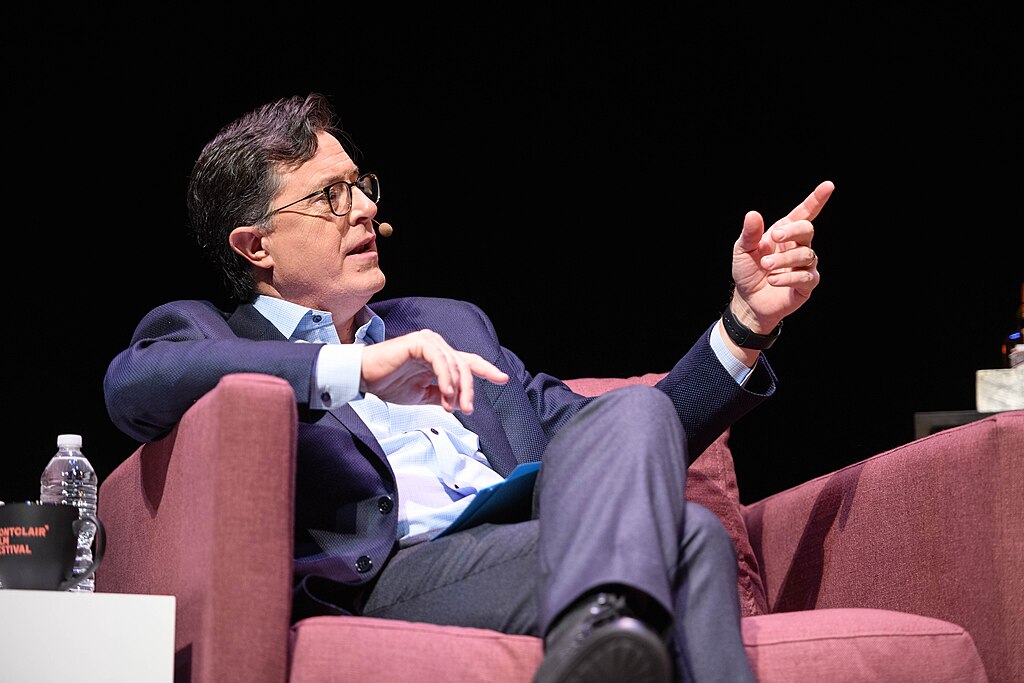
President Donald Trump sharply criticized late-night television host Stephen Colbert this week, delivering a forceful rebuke of what he described as years of relentless political hostility toward conservatives.
In a late-night post on Truth Social, Trump accused Colbert of turning The Late Show into a platform driven more by political animosity than comedy, arguing that the approach has alienated viewers and damaged the program’s long-term viability.
The president pointed to falling ratings and CBS’s decision to cancel the show as evidence that audiences are increasingly rejecting late-night programs that focus heavily on partisan attacks. CBS has stated the cancellation was a financial decision, though critics argue it reflects deeper cultural and market shifts.
Trump later expanded his criticism beyond Colbert, raising concerns about the broader media landscape. He questioned why network broadcasts that consistently promote one-sided political messaging continue to benefit from publicly regulated broadcast licenses.
According to Trump, late-night television has moved away from entertainment and toward activism, leaving many longtime viewers—particularly older Americans—feeling ignored or insulted.
CBS has announced that Colbert’s final episode is scheduled to air in May 2026, marking the end of an era for a show that increasingly aligned itself with progressive political causes.
Following the announcement, Trump suggested that Colbert may not be the only late-night host facing declining relevance. He referenced Jimmy Kimmel, noting that audiences appear to be growing weary of celebrity lectures disconnected from everyday American concerns.
Colbert has been one of Trump’s most vocal television critics, frequently dedicating monologues to mocking the president and his supporters while hosting Democratic politicians and liberal activists in favorable interviews.
For many conservative viewers—especially those who remember when late-night television focused on humor rather than ideology—the controversy highlights a broader reckoning in legacy media, where political bias and shrinking audiences are colliding with economic reality.