
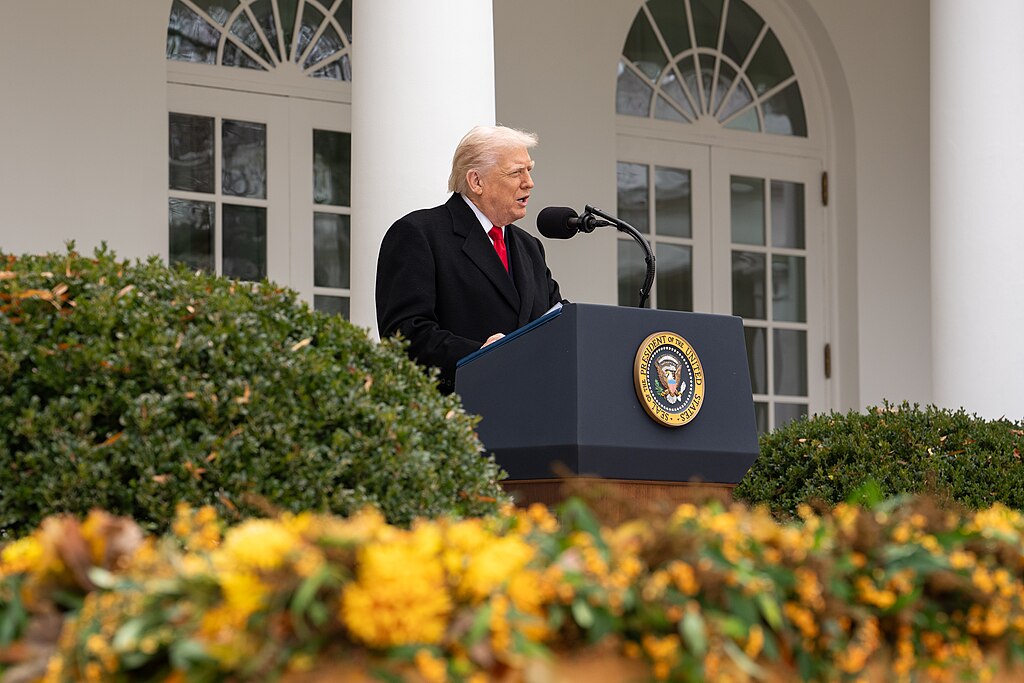
President Donald Trump is once again defending his economic record—but new polling and expert analysis suggest many Americans remain unconvinced, raising concerns that the White House could be repeating the same messaging mistakes that hurt former President Joe Biden.
With inflation, grocery prices, gas costs, and housing affordability still squeezing household budgets, the economy is shaping up to be a defining issue ahead of the 2026 midterm elections.
While the Trump administration insists the comparison to Biden is unfair, voter sentiment tells a more complicated story.
Inflation Still the Top Concern for Voters
Despite optimistic economic messaging from Washington, Americans continue to list inflation as their number-one issue, according to recent polling from YouGov and The Economist.
Economic anxiety is expected to dominate the midterm campaign season, particularly as Democrats attempt to retake Congress and Republicans work to hold their majority.
President Trump addressed the nation this week, highlighting what he described as major economic progress while placing blame for lingering problems squarely on the Biden administration.
Trump Defends His Economic Record
In his remarks, Trump argued that he inherited an economy on the brink and has spent the past year reversing what he called Biden-era economic damage.
“After 11 months, our border is secure, inflation has stopped, wages are rising, prices are coming down, and America is respected again,” Trump said. “We are positioned for an economic boom the world has never seen.”
The president emphasized tariffs, domestic manufacturing, and increased investment as pillars of his economic strategy. He also pointed out that inflation was at its highest level in decades when he returned to office.
“One year ago, our country was ready to fail,” Trump added. “Now we’re the hottest economy anywhere in the world.”
Polls Show Americans Aren’t Feeling Relief
However, surveys suggest that many voters do not share that optimism.
A YouGov poll found that 52 percent of Americans believe the economy is getting worse, while only 20 percent say it’s improving. Just 4 percent rated the economy as “great,” with most describing it as either “fair” or “poor.”
A separate Quinnipiac University poll showed similar results, with nearly two-thirds of voters rating the economy negatively.
For many households—especially retirees and fixed-income Americans—rising prices continue to outweigh positive headlines about GDP growth or the stock market.
Experts Warn of a Familiar Messaging Trap
Political analysts say the problem may not be economic policy itself, but how it’s being communicated.
Several experts told Newsweek that while certain indicators remain strong—such as consumer spending and market performance—high prices and inflation dominate everyday life.
That disconnect, they warn, mirrors one of Biden’s biggest political weaknesses: emphasizing economic statistics while voters felt poorer.
“When people don’t feel improvement at the grocery store or gas pump, positive messaging doesn’t resonate,” one analyst noted.
This dynamic played a major role in Biden’s collapsing approval ratings and could pose similar risks for Republicans if economic concerns persist into 2026.
Why Midterms Could Be at Risk
Historically, the party controlling the White House often loses seats during midterm elections. Republicans experienced that reality in 2018, while Democrats faced losses in 2022.
Current generic ballot polling already gives Democrats a slight advantage—raising alarm bells among GOP strategists who believe affordability will decide close races.
The White House maintains that Trump is doing exactly what Biden failed to do: confronting inflation head-on instead of minimizing it.
A spokesperson said Trump has focused on reversing a “Biden-made affordability crisis,” citing cooling inflation and rising real wages as evidence of progress.
Voters Want Acknowledgment, Not Just Optimism
Political observers say Trump’s greatest strength has always been his ability to connect with voters who feel ignored by political elites.
But analysts caution that repeatedly declaring the economy “fixed” while families struggle could weaken that connection—particularly among older voters who closely track costs like food, utilities, healthcare, and fuel.
Many voters say they want realism paired with hope—not just promises of future prosperity.
Former House Speaker Newt Gingrich offered a more confident assessment, saying Trump’s recent remarks showed discipline and focus that should make Democrats nervous heading into the midterms.
The Bottom Line for 2026
Democrats are already rolling out an affordability-focused campaign message, arguing that Trump’s policies have not delivered meaningful relief for working families and retirees.
President Trump is expected to continue defending tariffs, domestic investment, and his broader economic agenda as inflation remains front and center.
As the 2026 elections approach, one thing is clear: how Trump talks about the economy may be just as important as the numbers themselves—especially for voters over 50 who remember how quickly economic confidence can collapse.