
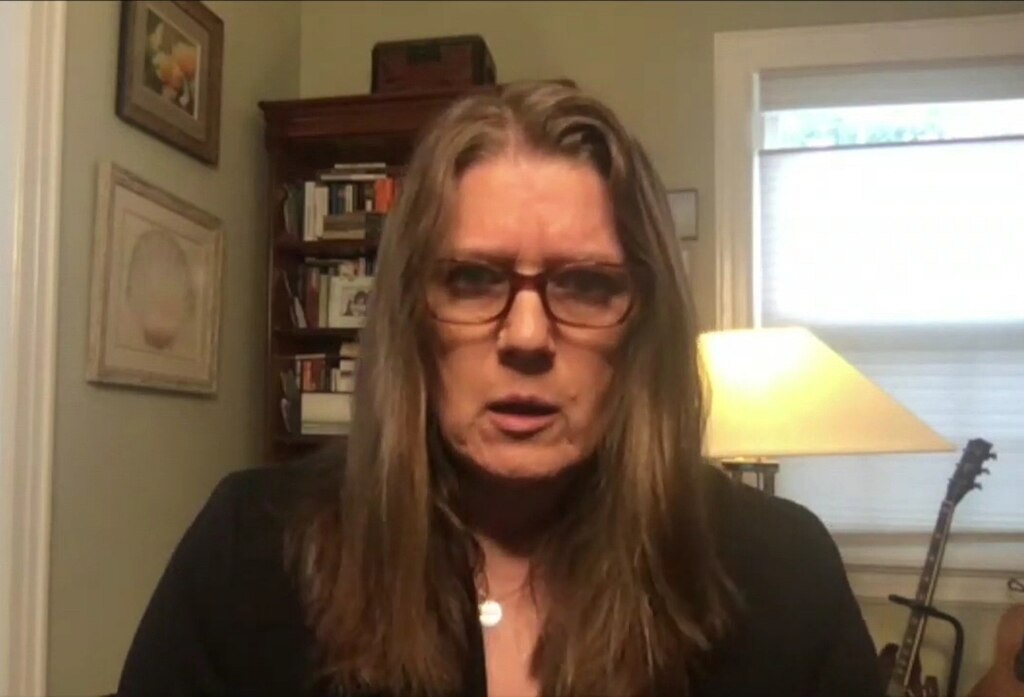
Mary Trump, the estranged niece of President Donald Trump and a frequent critic of the administration, is once again drawing attention after issuing a grim assessment of the president’s political future.
In a recent online post, Mary Trump claimed the president is headed down what she described as a “slippery slope,” arguing that he is losing influence and momentum following his return to the White House.
The White House was quick to respond.
Steven Cheung, White House Communications Director, dismissed her remarks, telling Newsweek that Mary Trump is “a stone-old loser who doesn’t have a clue about anything,” rejecting her claims as politically motivated attacks from a longtime adversary of the president.
Mary Trump, the daughter of Fred Trump Jr., has positioned herself for years as a vocal opponent of her uncle. She frequently criticizes President Trump’s leadership and Republican policies through media appearances and her Substack newsletter, The Good in Us.
In her latest post, she argued that President Trump has lost control of the public narrative, claiming the country faces what she described as growing uncertainty. She also asserted that strategies she believes once worked for the president are no longer effective in shaping public opinion.
According to Mary Trump, challenges facing the administration have accumulated not because they are unsolvable, but because addressing them has become more complex. She suggested that dismissing critics or confronting reporters is no longer enough to persuade skeptical voters.
She pointed to recent polling as support for her argument.
A survey conducted by YouGov and The Economist in late December reported that 39 percent of respondents approved of the president’s job performance, while a majority expressed disapproval. The poll surveyed 1,592 adults over several days and cited concerns about the economy, rising costs, and lingering frustration over the delayed release of Epstein-related documents.
President Trump had previously pledged to release the files, though the administration moved more slowly than some supporters expected until Congress voted to compel their release last month.
Mary Trump concluded her commentary by suggesting that while the country itself could recover, she believes the president is unlikely to change course. She argued that meaningful improvement would require acknowledging limitations, deferring to experts, and admitting mistakes—steps she claims he is unwilling to take.
President Trump has repeatedly dismissed negative polling and hostile media coverage.
In a Truth Social post last November, the president blasted what he called “Fake Polls” pushed by the “Radical Left Media,” accusing them of intentionally slanting results against him while reminding supporters that he continues to serve from the Oval Office.
Media figures have seized on the polling narrative as well. CNN analyst Harry Enten recently highlighted the president’s negative net approval rating, while some Republicans have begun openly discussing internal party dynamics ahead of the 2026 midterm elections.
Rep. Marjorie Taylor Greene of Georgia told CNN that recent Republican votes breaking with the White House may signal that some lawmakers are beginning to position themselves for upcoming campaigns.
As the midterms approach, President Trump’s approval numbers—real or perceived—are expected to play a key role in shaping Republican strategy. With control of both the House and Senate on the line, Democrats are eager to exploit any signs of weakness, while Republicans continue to challenge the credibility of critics both inside and outside the party.