
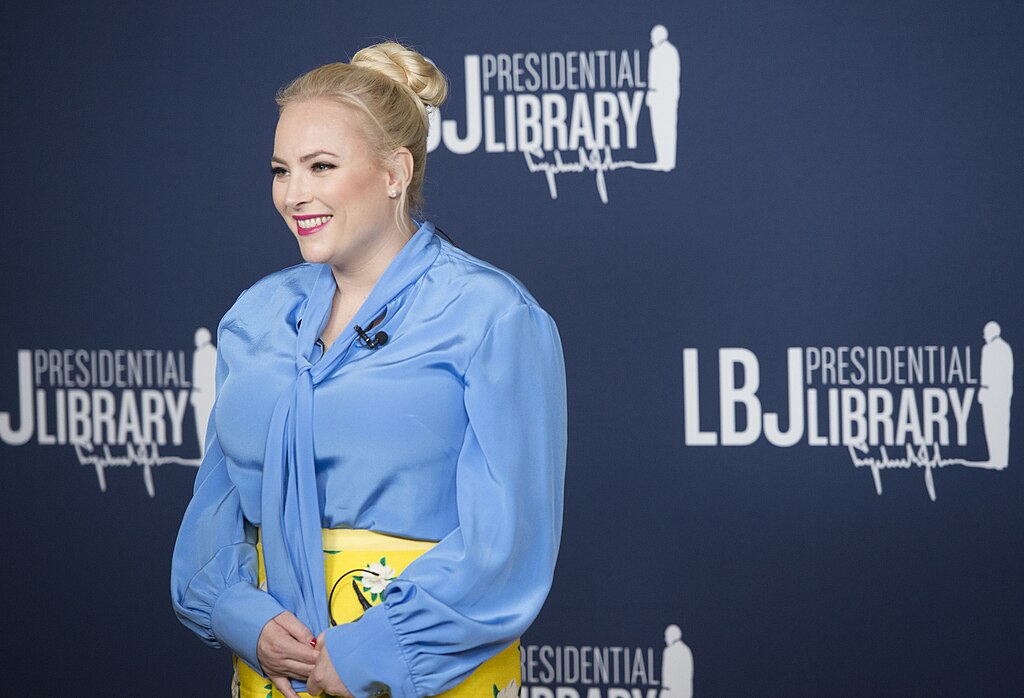
A new political debate erupted over the weekend after conservative commentator Meghan McCain publicly urged the Trump administration to reconsider sending Sen. Lindsey Graham (R-S.C.) to represent the administration’s message about the ongoing conflict with Iran.
McCain, the daughter of the late Republican Senator John McCain, posted the warning on social media Sunday, arguing that Graham’s blunt rhetoric could be creating unnecessary concern among Americans as tensions in the Middle East continue to rise.
“I’ve known Lindsey Graham since I was a child,” McCain wrote. “But I’m asking anyone in the Trump administration who will listen to stop sending him out as a spokesperson. His comments are scaring people and hurting whatever message the administration is trying to communicate about the Iran conflict.”
Her comments immediately sparked debate among conservatives and political commentators across the country.
Trump Administration Faces Pressure Over Iran Messaging
The dispute comes at a sensitive time for the Trump administration, which is currently navigating multiple international and domestic controversies tied to national security operations.
The most significant development has been the recent military campaign targeting Iran. The operation—reportedly known as “Operation Epic Fury”—involves coordinated strikes between the United States and Israel aimed at weakening Iran’s military and nuclear capabilities.
Supporters of the operation argue the strikes were necessary to prevent Iran from advancing its nuclear ambitions and threatening American allies in the region.
However, critics—including some members of Congress—say the administration should have more clearly explained its strategy to the American public before launching the attacks.
Some lawmakers have even compared the situation to the lead-up to the Iraq War, when President George W. Bush spent months making the case for military action.
Domestic Controversy Adds to Political Pressure
At the same time, the administration has been facing domestic criticism related to “Operation Metro Surge,” a law enforcement operation in Minnesota that ended in the deaths of two Americans, Renee Nicole Good and Alex Pretti.
Early statements from officials describing the victims as domestic terrorists before investigations were completed triggered backlash from critics and raised questions about how information was communicated to the public.
The controversy has also contributed to leadership changes within the administration.
Homeland Security Secretary Kristi Noem is expected to leave her current role at the end of March and transition to a newly created diplomatic position focused on Western Hemisphere security.
Observers believe the fallout from the Minnesota incident may have played a role in the decision.
Lindsey Graham’s Strong Words Ignite Debate
McCain’s criticism followed a high-profile television interview in which Senator Graham delivered a forceful defense of the administration’s approach to Iran.
Appearing on Fox News’ “Sunday Morning Futures” with Maria Bartiromo, Graham argued that the Iranian regime is entering a period of instability.
“This regime is in its final phase,” Graham said during the interview. “It’s going to fall. And when it does, we’re going to see peace and prosperity in the region unlike we’ve seen before.”
Graham praised the U.S. military and dismissed criticism from Democrats who oppose the operation.
“You can’t accomplish something like this just by talking,” he said. “The men and women in our military deserve our gratitude and respect.”
Conservatives Split Over Graham’s Tone
McCain’s post quickly drew reactions from across the political spectrum.
Some conservatives agreed that Graham’s rhetoric could complicate the administration’s messaging during a tense international crisis.
Others argued that the senator’s comments reflect the strong stance the United States must take when dealing with hostile regimes.
The debate intensified when well-known conservative media host Megyn Kelly shared a clip of Graham’s remarks and expressed concern about his influence within Trump’s political circle.
“For the love of God,” Kelly wrote in response to the interview, “this man should not be anywhere near Trump’s orbit.”
Graham’s Reputation as a Foreign Policy Hawk
Senator Graham has long been one of Washington’s most outspoken advocates for aggressive foreign policy.
Over the years he has supported strong military responses to adversaries and has frequently argued that American leadership is essential for maintaining global stability.
Earlier this year, Graham stirred controversy when discussing the geopolitical importance of Greenland, dismissing concerns about which nation formally controls the territory and instead emphasizing its strategic value.
The comment drew criticism from some international observers, who said the senator’s remarks reflected an overly blunt diplomatic style.
Could Cuba Be the Next Focus?
During the same Fox News interview, Graham also suggested that Cuba could soon become a major focus of American foreign policy.
Wearing a hat that read “Free Cuba,” the senator hinted that dramatic changes could be coming to the island nation.
“Stay tuned,” Graham said. “The liberation of Cuba is coming. It’s only a matter of time.”
Those comments echoed recent remarks from President Donald Trump, who said during a summit in Miami that he believes political change in Cuba may be approaching.
Trump told attendees he looks forward to “the great change that will soon be coming to Cuba,” describing the current government in Havana as nearing “its final moments.”
Supporters Say Trump Is Reshaping Global Policy
Graham framed the administration’s broader strategy as part of a larger effort to confront hostile regimes while strengthening alliances with democratic nations.
“We’re moving through the world confronting the bad actors,” Graham said. “At the same time, we’re building relationships with new partners that will make America safer and more prosperous.”
The South Carolina senator compared Trump’s leadership to that of President Ronald Reagan, suggesting the current foreign policy approach could reshape global politics for years to come.
Whether Americans view that strategy as bold leadership or unnecessary escalation remains a topic of intense debate.
But as tensions with Iran continue to dominate headlines, the discussion about how the Trump administration communicates its policies may become just as important as the policies themselves.
Leave a Reply
You must be logged in to post a comment.