
President Donald Trump’s authority over the Federal Reserve is about to face a defining legal moment — and the outcome could reshape the balance of power between the White House and Washington’s most powerful financial institution.
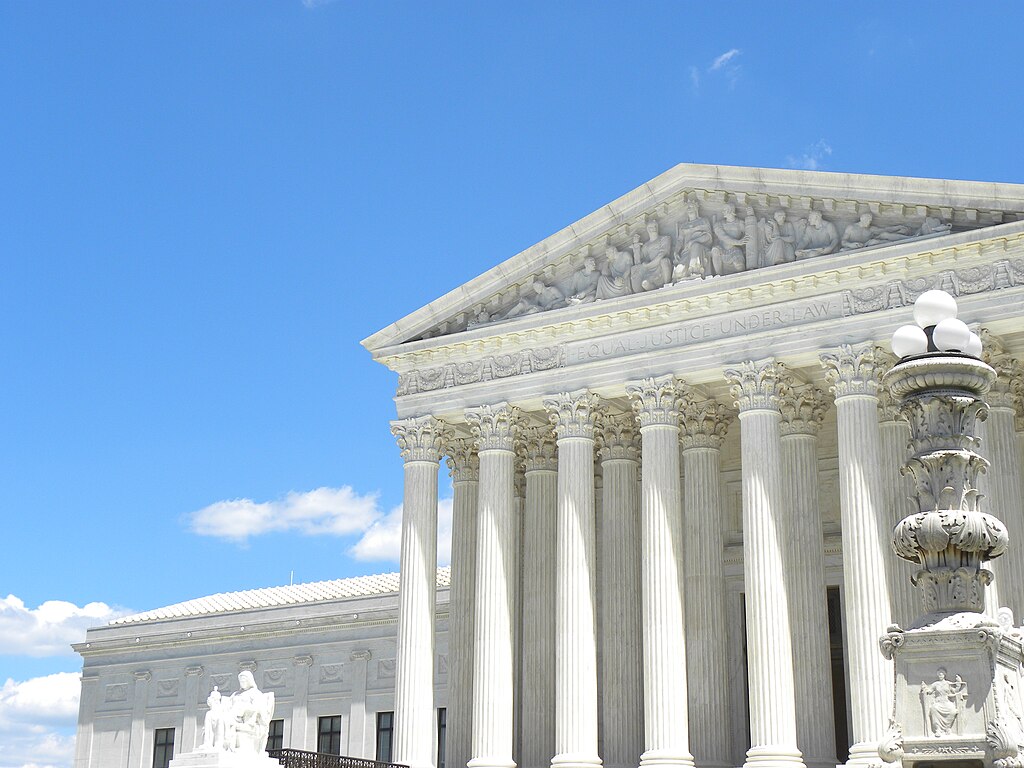
Next week, the Supreme Court will hear arguments in a high-stakes case examining whether Trump lawfully removed Federal Reserve Governor Lisa Cook, citing alleged mortgage irregularities. The decision could set a lasting precedent for how much control a president can exert over the central bank.
The case arrives as scrutiny of the Federal Reserve intensifies, following the public disclosure of a Justice Department investigation involving Fed Chair Jerome Powell.
A major test of presidential authority
During his second term, Trump has pushed to reassert presidential oversight over federal agencies that have historically operated with a high degree of independence.
Supporters of the administration argue that these agencies wield enormous power with limited accountability. Critics counter that insulating them from politics protects economic stability.
At the center of the debate is a long-standing constitutional question: how much authority does a president have over executive officials once confirmed by the Senate?
Legal scholars note that the Supreme Court’s conservative majority has recently shown openness to revisiting older limits on presidential power — though the Federal Reserve may be treated differently than other agencies.
Why the Federal Reserve is different
In a previous unsigned opinion, the Supreme Court described the Federal Reserve as a uniquely structured institution with deep historical roots. That language has fueled speculation that the justices may preserve special protections for Fed leadership.
So far, Trump has stopped short of removing Powell outright, despite months of criticism over interest-rate policy. Instead, the administration focused on Cook, arguing her dismissal met the legal standard of being “for cause.”
That distinction may prove critical.
What does “for cause” really mean?
The Federal Reserve Act of 1913 allows a president to remove a Fed governor only “for cause.” However, Congress never clearly defined that term.
Trump’s decision marks the first time a sitting Fed governor has been removed by a president, placing the Supreme Court in uncharted legal territory.
The administration says Cook was dismissed over alleged misrepresentation tied to a mortgage application. Cook’s legal team insists the matter was an innocent paperwork error and denies any wrongdoing.
Both sides agree on one thing: governors cannot be removed simply for disagreeing with interest-rate decisions.
Heavy legal firepower on both sides
The Justice Department argues presidents must retain the authority to remove officials for serious misconduct or ethical lapses.
Cook is represented by prominent attorney Paul Clement, a former U.S. solicitor general with deep conservative credentials. Her legal team argues the allegations involve conduct prior to her Fed appointment and claims she was denied due-process protections.
A group of former Federal Reserve chairs and Treasury secretaries filed briefs warning that weakening removal protections could undermine confidence in the financial system.
Meanwhile, Trump’s position is backed by America First-aligned legal groups and more than twenty Republican state attorneys general.
The Powell investigation adds new pressure
The stakes rose further last week when Powell disclosed that the Justice Department issued a subpoena related to his prior congressional testimony.
The investigation centers on cost overruns tied to renovations at the Federal Reserve’s headquarters — a project that reportedly exceeded original estimates by hundreds of millions of dollars.
Powell has suggested the probe is politically motivated, a claim the Justice Department has not publicly addressed.
Powell’s term as Fed chair expires in mid-May, though his seat on the governing board runs through 2028. The Supreme Court’s ruling is expected by late June.
Why this ruling matters to everyday Americans
This case isn’t just about internal Washington politics.
A ruling in Trump’s favor could significantly expand presidential authority over independent agencies. A ruling against him could reinforce decades-old limits designed to shield economic policy from political pressure.
Either way, the decision could affect interest rates, market confidence, and the future structure of federal power.
For supporters, it represents a long-overdue effort to restore accountability. For critics, it raises concerns about institutional independence.
The Supreme Court’s answer will help determine which vision prevails.