
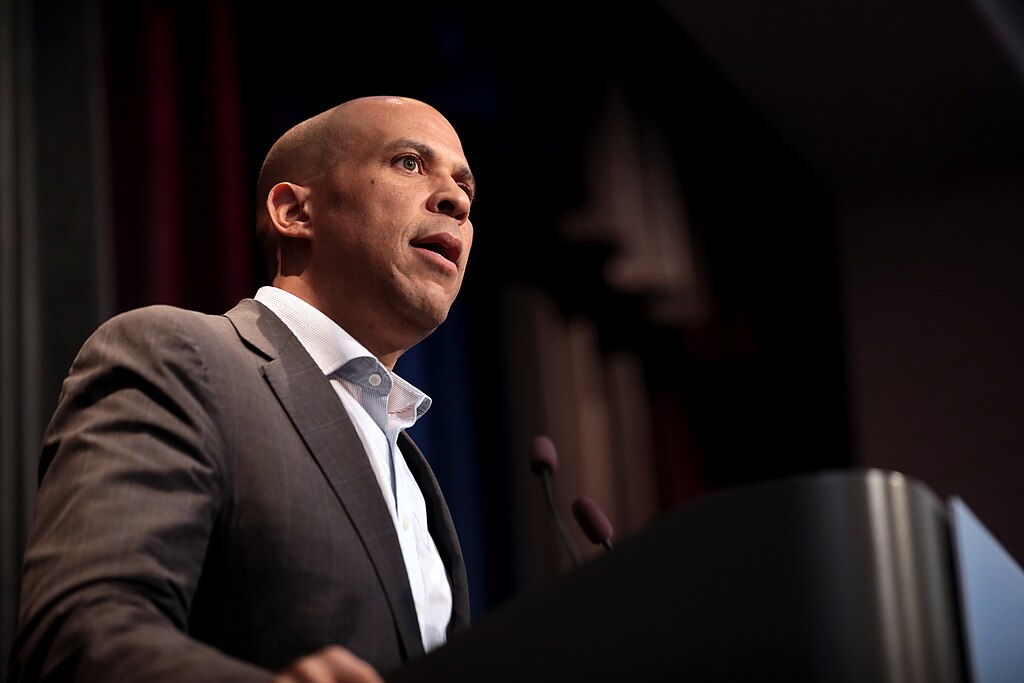
A new tax proposal from Sen. Cory Booker is drawing attention — and criticism — after many observers pointed out that the core concept closely resembles policies long promoted by conservatives, including tax relief championed during President Donald Trump’s administration.
Booker, a Democrat from New Jersey who faces reelection in 2026 and is widely rumored to be considering a 2028 presidential run, recently introduced legislation called the “Keep Your Pay Act.”
The proposal would dramatically reduce federal income taxes for many Americans by eliminating taxes on the first $75,000 of income for most households.
Supporters say the plan would provide significant financial relief for working families struggling with inflation and rising living costs. Critics, however, argue that Democrats are now embracing an idea conservatives have supported for years: letting Americans keep more of their own money.
What the New Tax Plan Would Do
Under Booker’s proposal, the standard deduction would rise to $75,000 for married couples filing jointly, with scaled deductions available for single filers and heads of household.
If enacted, the change could drastically reduce federal tax bills for many families.
According to estimates released alongside the bill, the average middle-class household could see its federal income tax burden drop by roughly 85 percent.
Booker said the goal is simple: help Americans keep more of their earnings during a time when many households feel financially squeezed.
“Families across the country are working harder than ever, but many are still struggling to get ahead,” Booker said when announcing the proposal. “Eliminating income taxes on the first $75,000 families earn would put meaningful relief directly into people’s pockets.”
He added that the tax cut could help families manage rising costs, prepare for unexpected expenses, and plan for long-term financial security.
How Democrats Say They Would Pay For It
While the proposal centers on tax cuts for working Americans, Booker’s plan would attempt to offset the cost by increasing taxes elsewhere.
The legislation includes several measures aimed at corporations and wealthy individuals, including:
- Raising the corporate tax rate
- Increasing taxes on corporate stock buybacks
- Tightening limits on executive compensation tax deductions
- Expanding enforcement against corporate tax avoidance
Booker argues that these changes would “rebalance” the tax system and ensure that large corporations contribute more in federal taxes.
However, many conservatives point out that President Trump’s economic agenda focused on broad tax reductions and economic growth rather than increasing corporate taxes.
During Trump’s presidency, the 2017 Tax Cuts and Jobs Act significantly reduced taxes for individuals and businesses while aiming to boost investment and job creation.
Critics of Booker’s proposal argue that Democrats are now attempting to adopt a similar message about tax relief — while still increasing taxes in other areas.
Major Expansion Of Child Tax Credits
In addition to eliminating income taxes on the first $75,000 earned by many households, Booker’s proposal includes a significant expansion of federal tax credits aimed at families with children.
The bill would:
- Increase the Child Tax Credit to $3,600 per child between ages 6 and 17
- Provide $4,320 annually for children under age 6
- Offer a $2,400 “baby bonus” during the year a child is born
- Make the credits fully refundable
The legislation would also expand the Earned Income Tax Credit, tripling its value while broadening eligibility.
Under the proposal, younger workers between 19 and 24 years old, as well as older workers 65 and older, could qualify even if they do not have children living at home.
Supporters say these changes could provide meaningful financial support to millions of households.
Online Calculator Lets Americans Estimate Savings
To promote the legislation, Booker’s office also launched an online tax calculator that allows Americans to estimate how much money they might save if the proposal became law.
The tool is designed to show how eliminating federal taxes on the first $75,000 of income could affect household budgets.
While the proposal has attracted attention for its potential tax cuts, it also raises broader questions about the direction of Democratic economic policy — particularly as Democrats prepare for major national elections in the coming years.
Political Timing Raises Questions
Booker’s announcement comes as the 2026 election cycle begins to take shape.
Although the Cook Political Report currently classifies Booker’s Senate seat in New Jersey as solid Democrat, the timing of the proposal has fueled speculation about his long-term political ambitions.
Republicans currently hold a 53-seat majority in the U.S. Senate, compared to 45 Democrats and two independents who caucus with them.
Several key Senate races could determine which party controls the chamber after the 2026 midterm elections.
Major battleground states expected to attract national attention include:
- Alaska
- Georgia
- Maine
- Michigan
- Ohio
Republicans may also target a seat in New Hampshire, where former Senator John Sununu has announced plans to run again.
New Jersey Race Begins
In New Jersey, the deadline to file for the Senate primary is March 23, with the primary election scheduled for June 2.
Several Republican candidates have already begun exploring campaigns against Booker.
Names mentioned so far include:
- Richard Tabor, a former New Jersey State Trooper
- Alex Zdan, a former television reporter
While Booker remains heavily favored in the race, the rollout of a sweeping tax proposal suggests that economic policy — and the debate over who deserves credit for tax relief — could become a central issue in the coming election cycle.
For many conservatives, the larger question remains whether Democrats are now embracing ideas that were once strongly associated with Trump-era tax policy: cutting taxes and allowing Americans to keep more of their paychecks.
Leave a Reply
You must be logged in to post a comment.