
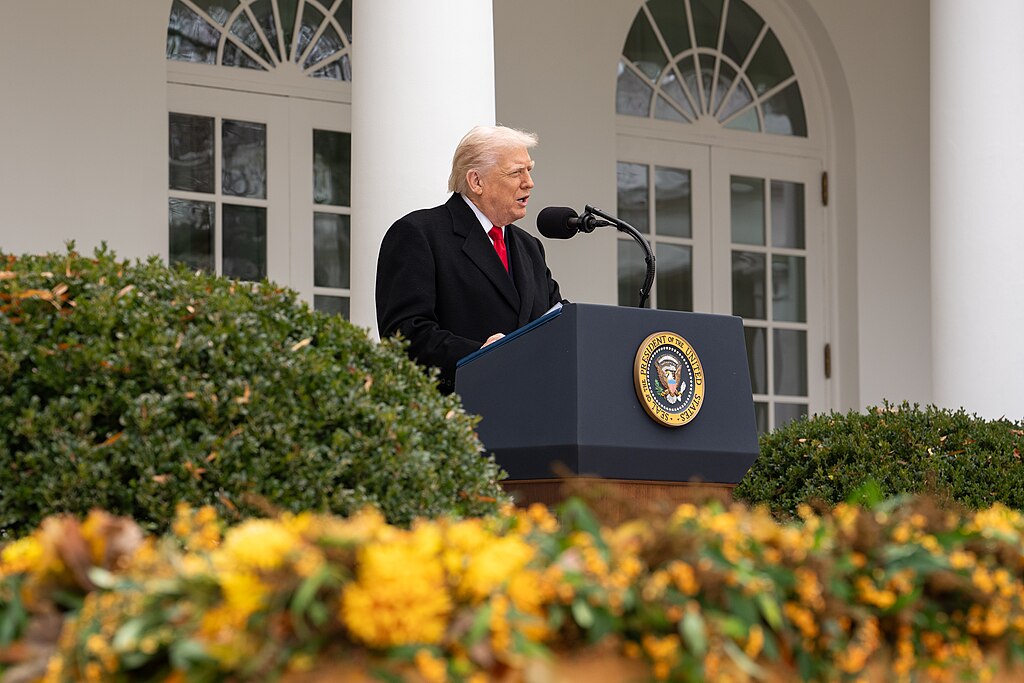
President Donald Trump warned Friday that the United States could impose new tariffs on foreign nations that block his efforts to secure Greenland — a move he described as vital to America’s long-term national security and Arctic defense strategy.
Speaking at the White House, Trump signaled that economic leverage remains firmly on the table.
Trump said he could impose tariffs on nations that refuse to support the Greenland proposal, arguing the territory is essential to U.S. national security.
The remarks immediately reignited global debate over Greenland’s strategic value and America’s role in the rapidly changing Arctic region.
Why Greenland Matters to U.S. Security
Greenland, the world’s largest island, sits at a critical crossroads between North America, Europe, and the Arctic Ocean. As ice melts and new shipping lanes open, the region is becoming increasingly valuable for military positioning, energy exploration, and access to rare earth minerals.
Although Greenland governs itself domestically, it remains part of the Kingdom of Denmark and already hosts a major U.S. military installation that defense planners consider essential for missile warning systems and Arctic surveillance.
Supporters of Trump’s position argue that allowing rival powers to gain influence in the Arctic would weaken U.S. national security and threaten NATO’s northern flank.
Legal and Political Timing
Trump’s remarks come at a time when his administration is awaiting a Supreme Court decision that will determine whether tariffs enacted in 2024 were legally justified, a ruling that could influence future trade enforcement.
The president first raised the idea of acquiring Greenland during his previous term, drawing sharp criticism from Denmark and resistance from European leaders. That skepticism has returned as Trump renews his focus on the island’s strategic importance.
NATO Allies Respond
Following Trump’s latest remarks, Denmark and several NATO allies expressed concern. Reports indicate that troops from multiple European countries — including France, Germany, Sweden, and Norway — have increased their presence in Greenland as part of precautionary security measures.
While critics accuse Trump of inflaming tensions, administration allies argue the deployments underscore Greenland’s growing military significance and validate U.S. concerns about Arctic security.
Americans Remain Divided
Public opinion at home remains mixed. A recent Quinnipiac University poll found that 86 percent of American voters oppose using military force to take control of Greenland. The survey also showed voters opposing a U.S. purchase of the island by a 55–37 percent margin.
Despite the skepticism, Trump continues to frame the issue as a forward-looking national security decision rather than a territorial dispute.
The Bigger Picture
As global competition intensifies in the Arctic, Greenland has become a symbol of broader struggles over energy, trade routes, and military dominance. Whether Trump’s approach ultimately reshapes U.S. policy or remains a political flashpoint, the debate is unlikely to fade anytime soon.
For now, the issue places renewed strain on U.S. relations with longtime allies — while forcing voters, lawmakers, and global leaders to confront the realities of a rapidly changing Arctic world.