
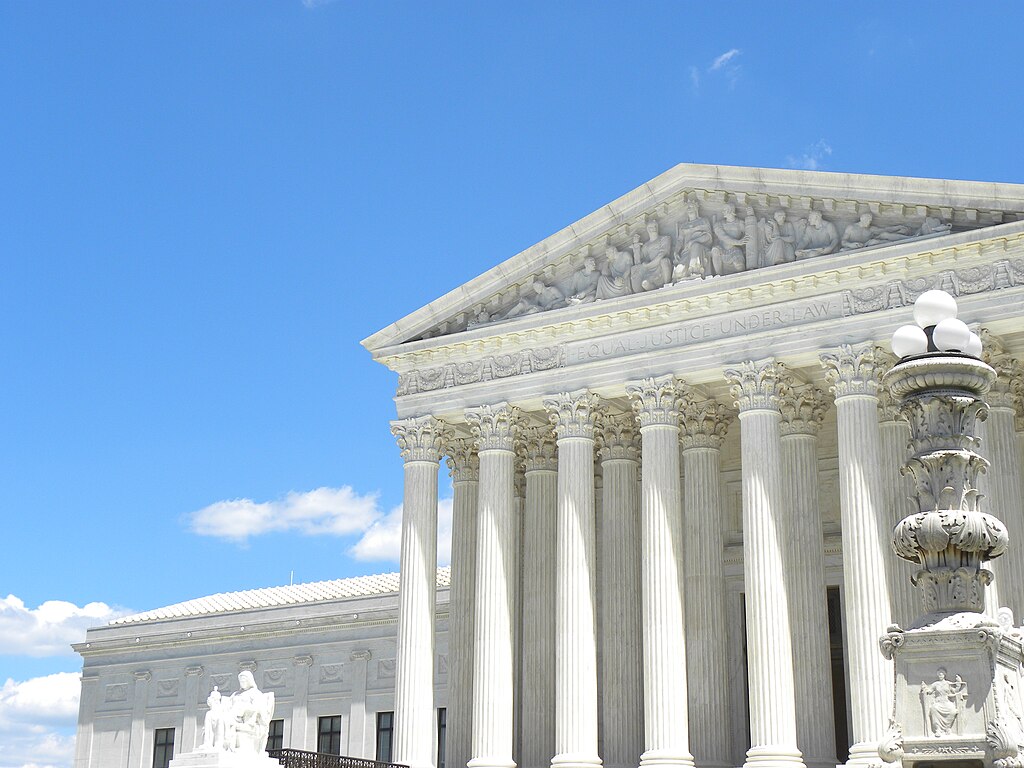
A dramatic moment unfolded inside the U.S. Supreme Court this week as President Trump’s push to rein in Washington’s powerful bureaucracy brought the courtroom to a complete halt. In a case that could reshape presidential authority for generations, the justices confronted the core question conservatives have been asking for decades: Who really runs the federal government — elected leaders or unelected regulators?
During arguments in Trump v. Slaughter, Justice Sonia Sotomayor clashed sharply with Solicitor General D. John Sauer after he argued that America’s constitutional system would not collapse if presidents regained the authority to remove officials who defy the White House. Sauer insisted, “The sky will not fall.”
Sotomayor fired back, claiming his argument would allow the president “to do more than the law permits.”
And the chamber froze.
A High-Stakes Challenge to a 90-Year Power Shield
The case centers on whether the Court should overturn Humphrey’s Executor, a 1935 decision that insulated independent federal agencies — including the FTC — from direct presidential oversight. For nearly a century, this precedent has protected bureaucrats from accountability while weakening the power of the presidency itself.
President Trump’s lawful removal of FTC Commissioner Rebecca Kelly Slaughter triggered the current challenge. Now the Court must decide whether Congress can continue shielding regulators from the president — or whether those protections violate the Constitution.
For conservatives frustrated with runaway agencies, this case is the turning point they’ve been waiting for.
Trump’s Team Argues for Accountability — Not Endless Bureaucracy
Sauer made the administration’s stance clear: the Constitution gives the president the authority to dismiss executive officers who undermine the administration’s direction. Without this power, agencies become unrestrained political actors, answerable to no one.
This argument reflects a broader trend in Trump’s legal strategy throughout 2025 — restoring constitutional limits and reining in federal bodies like the NLRB that have long operated with minimal oversight.
Justice Samuel Alito invited Sauer to respond directly to Sotomayor’s attack.
Sauer calmly reiterated his point: “The entire government will move toward accountability to the people.”
It was a defining moment — a return to the idea that the president should control the executive branch, not anonymous bureaucrats.
A Courtroom Shockwave
When Sotomayor doubled down — accusing the administration of trying to “destroy the structure of government” — even seasoned court observers noted the tension.
Then came her line that stopped the room cold:
“You’re saying the president can do more than the law permits.”
Sauer paused, reaffirmed that Humphrey’s Executor is outdated, and concluded it must be overturned.
Chief Justice John Roberts seemed to agree, describing the old precedent as a “dried husk” of what it once was. That comment alone signaled how seriously the Court is reconsidering the barriers long placed between presidents and the agencies they are supposed to run.
The Future of the Administrative State Hangs in the Balance
If President Trump wins this case, the impact will be immediate and widespread:
- Presidents could remove agency heads who resist elected leadership.
- Cases involving the NLRB, Merit Systems Protection Board, and similar bodies could be resolved within days.
- Congress may need to rewrite major statutes.
- Federal agencies would no longer be able to act as a fourth branch of government.
Conservatives view this as a once-in-a-generation chance to restore accountability, limit the bureaucracy, and re-center power in the hands of the voters.
Even Justice Elena Kagan hinted at concern, noting that Sauer’s argument draws from the Constitution’s Vesting Clause — which gives “all executive power” to the president. That idea could realign Washington more dramatically than any case in decades.
What Happens Next
The justices will meet privately to cast their preliminary votes. From there, the senior justice in the majority will assign the opinion. Drafts will circulate for months as each justice refines their position. A ruling is expected by June 2026.
And when that ruling comes, it will:
- define presidential power,
- reshape the future of independent agencies,
- and determine how much authority President Trump — and all future presidents — truly possess.
The Supreme Court has not faced a moment this consequential in nearly a century… and President Trump’s argument just brought the chamber to total silence.