
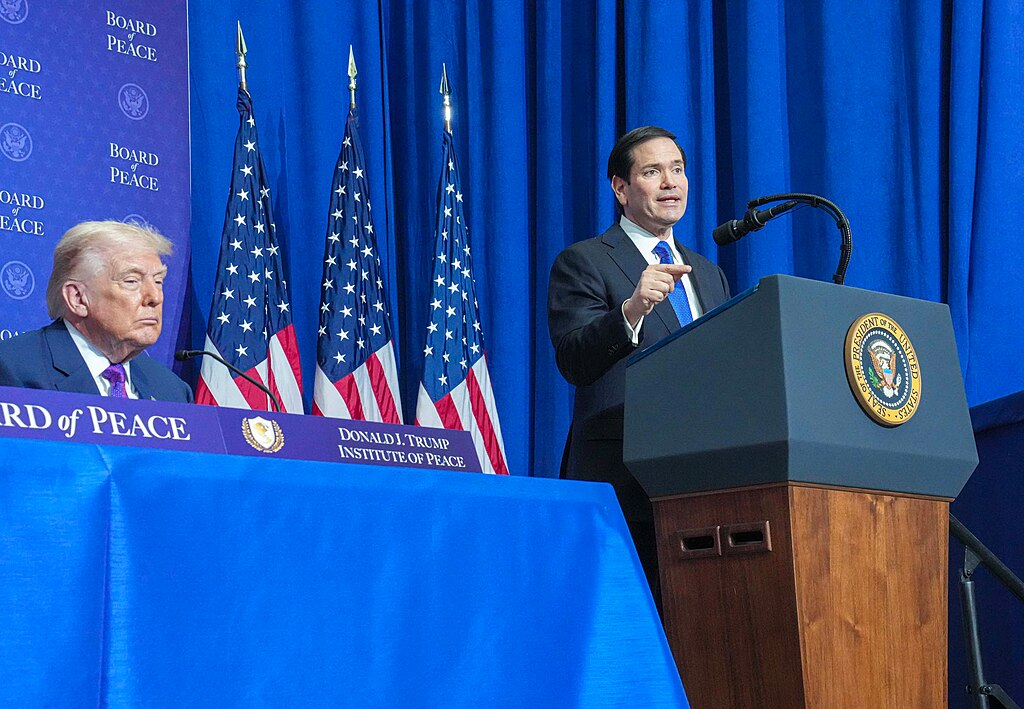
President Donald Trump faced a difficult series of developments Friday as new economic data showed slower U.S. growth, inflation rose again, and the Supreme Court ruled against a major part of his global tariff strategy.
The triple setback came just ahead of the President’s upcoming State of the Union address, placing renewed focus on the economy, inflation, interest rates, and trade policy — issues that matter deeply to retirees, investors, and working Americans alike.
Here’s a full breakdown of what happened and what it could mean for the U.S. economy moving forward.
U.S. GDP Growth Slows Sharply in Fourth Quarter
According to the Commerce Department, the U.S. economy grew at a 1.4% annual rate in the fourth quarter — a significant slowdown from earlier in 2025.
Economists pointed to multiple factors behind the weaker GDP growth:
- A six-week federal government shutdown that reduced government spending
- Slower consumer spending after strong summer activity
- Modest business investment outside of artificial intelligence sectors
The government shutdown alone is estimated to have reduced gross domestic product by roughly one percentage point.
For Americans watching retirement accounts, stock markets, and long-term economic stability, slower GDP growth can signal caution — especially when combined with persistent inflation.
President Trump sharply criticized Democrats over the shutdown, arguing that the disruption damaged economic momentum and calling for lower interest rates from the Federal Reserve.
Many analysts believe economic growth could rebound if government spending normalizes. However, rising federal debt and elevated borrowing costs remain potential risks.
Inflation Rises Again, Complicating Interest Rate Outlook
At the same time growth slowed, inflation showed renewed strength.
The Federal Reserve’s preferred inflation measure increased 0.4% in December and rose 2.9% compared to one year earlier — the fastest annual pace since early 2024.
Core inflation, which excludes volatile food and energy prices, also remained above the Federal Reserve’s 2% target.
For Americans age 50 and over — especially those living on fixed incomes or drawing from retirement savings — inflation remains one of the biggest financial concerns.
The latest report showed:
- Grocery prices continuing to rise
- Higher costs for clothing and household goods
- Elevated prices for furniture and services
- Some relief in gasoline prices
Although consumer spending remains steady, persistent inflation pressures make it less likely the Federal Reserve will cut interest rates soon.
Higher interest rates impact:
- Mortgage rates
- Credit card debt
- Small business borrowing
- Auto loans
- Stock market valuations
The central bank has repeatedly stated it wants clear, sustained progress toward 2% inflation before lowering rates.
Supreme Court Rules Against Global Tariff Strategy
In a separate but significant development, the Supreme Court ruled 6-3 against the administration’s sweeping global tariffs imposed under a 1977 emergency powers law.
The majority opinion stated that the Constitution gives Congress — not the President — the authority to impose taxes and tariffs.
The ruling blocks a key element of Trump’s broader trade policy agenda, which has focused on reshaping global trade relationships and protecting American manufacturing.
Federal data shows more than $133 billion was collected under the tariff program. The Court did not determine whether companies could seek refunds for previously paid tariffs.
Following the ruling, President Trump said alternative trade tools remain available and indicated plans to pursue a 10% global tariff under a separate, time-limited statute.
Trade policy remains a central pillar of Trump’s economic platform, particularly regarding China, supply chains, and domestic manufacturing.
Why This Matters for Investors, Retirees, and Small Businesses
Taken together, the developments highlight a delicate economic moment:
- Slower economic growth
- Inflation still above target
- Interest rates likely staying higher longer
- Legal challenges affecting trade policy
For older Americans managing retirement portfolios, pensions, or Social Security income, these factors can directly impact long-term financial planning.
Markets tend to react to uncertainty involving GDP growth, Federal Reserve policy, and Supreme Court rulings affecting major economic programs.
The Road Ahead Before the State of the Union
As President Trump prepares to address the nation, the economic picture is mixed:
- Employment remains relatively strong
- Consumer demand continues
- But inflation remains elevated
- Growth has slowed
- Legal challenges persist
Supporters argue that energy independence, domestic production, and stronger trade enforcement remain essential for long-term economic security.
Critics argue inflation and fiscal deficits require a different approach.
What is certain is this: inflation, interest rates, economic growth, and trade policy will dominate the national conversation in the months ahead.
For Americans concerned about retirement stability, cost of living, and the strength of the U.S. dollar, these issues remain front and center.
Leave a Reply
You must be logged in to post a comment.