
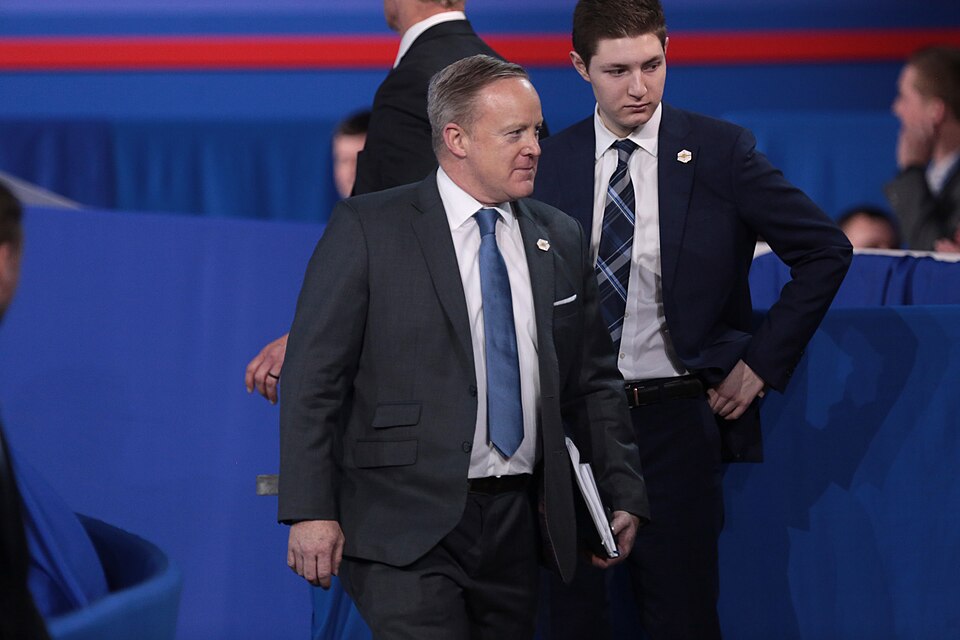
Rising gas prices tied to the growing conflict with Iran could create political challenges for Republicans if the situation drags on, according to former White House Press Secretary Sean Spicer.
Speaking during a Thursday interview with NewsNation host Chris Cuomo, Spicer said the length of the military operation may ultimately determine how voters respond — particularly if energy costs remain high heading into the summer months.
For many Americans, the price of gasoline remains one of the most visible indicators of economic pressure. If fuel prices spike during peak travel season, Spicer warned that the political consequences could be significant.
Gas Prices Could Shape Midterm Politics
Spicer explained that Americans are highly sensitive to sudden increases in fuel costs, especially when family budgets are already stretched.
“If we get into the summer travel season and people are noticing that it costs dramatically more to fill up their vehicles, that becomes a real concern,” Spicer said.
He added that Republicans will need to clearly explain the purpose of the military operation while also presenting a strategy to stabilize the situation as quickly as possible.
“If Americans feel like they’re paying twice as much to drive to work or take a family trip, that’s going to spell trouble,” Spicer said.
Iran Conflict Shakes Global Energy Markets
Energy markets have already reacted to the escalating tensions in the Middle East.
Oil prices have fluctuated in recent days following joint U.S. and Israeli military strikes targeting Iran. The conflict has disrupted shipping through the Strait of Hormuz — one of the most important oil routes in the world.
Roughly 20 percent of global oil supplies normally pass through the narrow waterway, meaning any disruption can quickly impact international markets and fuel prices in the United States.
Trump Administration Moves to Stabilize Oil Supply
In response to the growing pressure on global energy markets, the Trump administration announced a temporary step designed to prevent major price shocks.
On Thursday evening, officials confirmed that the United States will temporarily ease sanctions on certain shipments of Russian oil. The authorization allows countries to purchase Russian oil that is already in transit through April 11.
Treasury Secretary Scott Bessent said the policy is a narrowly focused move intended to stabilize supply.
Writing on the social platform X, Bessent explained that the authorization applies only to oil already moving through global markets and is not intended to provide a long-term economic boost to Moscow.
According to Bessent, Russia generates most of its oil revenue through extraction taxes, meaning the temporary measure should not significantly increase Russian government income.
Democrats Push Back on Policy Decision
Democratic lawmakers quickly criticized the move, arguing that any easing of sanctions sends the wrong signal during a time of heightened tensions.
Some lawmakers also pointed to reports claiming Russia has shared intelligence with Iran that could be used to target U.S. military positions in the region.
Members of the Senate Committee on Banking, Housing and Urban Affairs have requested a congressional hearing with Treasury Secretary Bessent to examine the administration’s policy decision.
The request came after the administration earlier approved a limited sanctions exemption allowing Russian oil shipments to continue flowing to India.
In a joint letter released Wednesday, Democratic senators questioned the strategy.
Lawmakers argued that the administration cannot say it is focused on supporting U.S. military operations while at the same time easing sanctions that could benefit Russian President Vladimir Putin.
Energy Prices Remain a Key Issue for Voters
With tensions in the Middle East continuing to impact global energy markets, both parties are closely watching the effect on American consumers.
Gas prices have long played a major role in U.S. elections, as rising fuel costs quickly affect commuting, travel, and everyday expenses for millions of households.
As the situation develops, political leaders on both sides of the aisle will likely face increasing pressure to address the economic impact while navigating the broader geopolitical conflict.
Leave a Reply
You must be logged in to post a comment.