
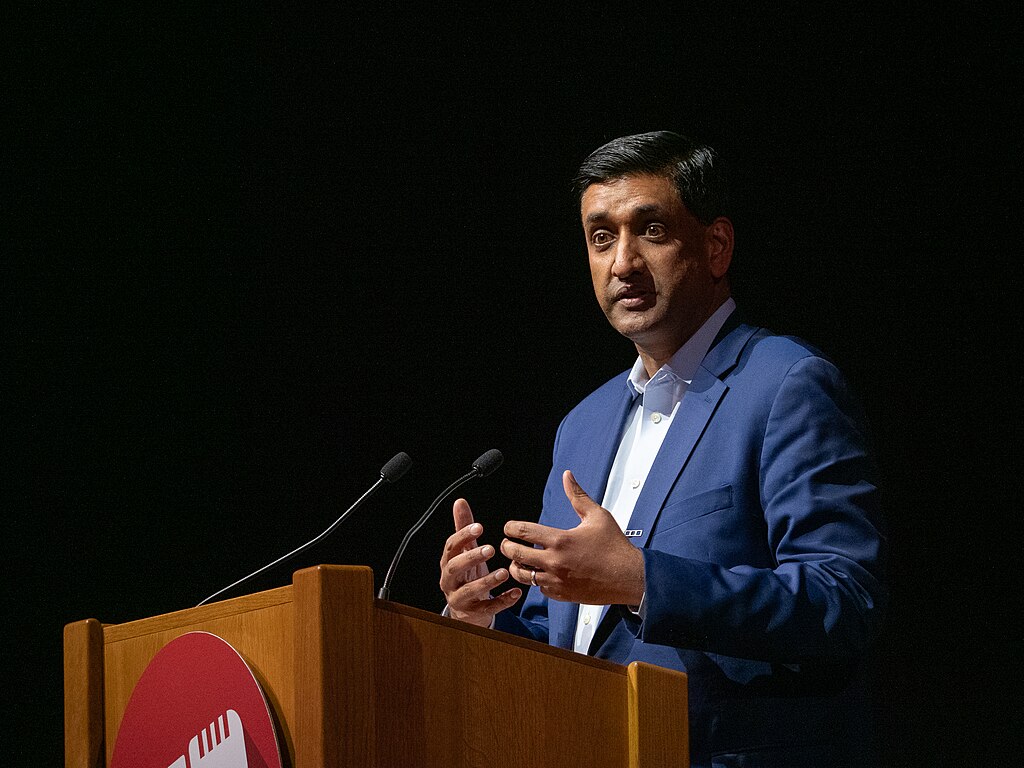
Rep. Ro Khanna, a California Democrat who has frequently criticized President Donald Trump, is now facing serious political pressure from an unexpected direction — Silicon Valley itself.
A rising tech entrepreneur has launched a primary challenge that could test Khanna’s grip on his congressional seat as frustration grows among technology leaders over the Democrat’s support for a controversial California wealth tax targeting billionaires.
The race is quickly shaping up as a battle between progressive economic policies and the tech industry that helped build Silicon Valley.
Silicon Valley Entrepreneur Launches Primary Challenge
Ethan Agarwal, a technology entrepreneur who briefly ran for California governor last year, has officially entered the Democratic primary for California’s 17th Congressional District, a seat Khanna has held since 2016.
The district sits in the heart of Silicon Valley and has traditionally supported Khanna by wide margins.
However, Agarwal argues the congressman has moved away from the pro-technology policies that originally earned him support from the region’s business leaders.
Political strategist Steven Maviglio says the challenge will still be difficult.
“Ro Khanna is a nationally recognized figure with a massive campaign war chest,” Maviglio explained. “That makes it a very steep climb for any challenger.”
Still, the growing backlash from Silicon Valley insiders suggests the race could become far more competitive than expected.
Wealth Tax Proposal Sparks Backlash
The biggest source of tension stems from Khanna’s support for a proposed California wealth tax that would impose a one-time 5 percent tax on billionaires living in the state.
Supporters say the tax would fund:
- Health care programs
- Food assistance initiatives
- Public education investments
But critics warn the policy could push wealthy investors and entrepreneurs to leave California altogether, taking jobs and economic growth with them.
Khanna has defended the plan by arguing that America must ensure the AI revolution benefits everyday Americans — not just tech billionaires.
In social media posts, Khanna even mocked wealthy business leaders threatening to leave the state, sarcastically suggesting he would not miss them.
He also argued that many breakthroughs in artificial intelligence were supported by taxpayer-funded research at American universities.
“America’s challenge is making sure innovation works for everyone,” Khanna said. “A billionaire tax can help strengthen American democracy and innovation.”
Silicon Valley Billionaires Fight Back
The proposal has angered several powerful figures within the technology world.
Y Combinator CEO Garry Tan quickly endorsed Agarwal’s campaign, accusing Khanna of turning against the business community that once supported him.
Tan argued that the congressman promised to support technology innovation but is now pushing policies that could harm the very companies that power Silicon Valley.
Prominent venture capitalist Ron Conway also endorsed Agarwal, saying Silicon Valley deserves a representative who prioritizes job creation and technological growth.
Meanwhile, several high-profile tech leaders have poured millions of dollars into political campaigns opposing the wealth tax initiative.
Among them:
- Sergey Brin, Google co-founder, reportedly donated $20 million
- Eric Schmidt, former Google CEO
- Chris Larsen, Ripple co-founder
- Michael Moritz, venture capitalist
- Peter Thiel, Palantir co-founder and early Trump supporter
These contributions are funding multiple political organizations working to defeat the wealth tax before it ever reaches voters.
Even Democrats Are Divided
The proposal has also created a major divide within the Democratic Party.
California Gov. Gavin Newsom, widely viewed as a possible 2028 presidential contender, has openly criticized the plan.
Newsom warned that California could suffer economic consequences if wealthy investors decide to relocate.
“We already have a progressive tax system,” Newsom said in an earlier interview. “But one state cannot implement a policy like this alone without serious risks.”
Despite the political controversy, polling suggests voters are split.
A survey conducted by the University of California, Berkeley and Politico found:
- 50% support the wealth tax
- 28% oppose it
- 23% remain undecided
The divide reflects broader frustrations over California’s skyrocketing cost of living, especially in Silicon Valley where housing prices have exploded.
Can Ro Khanna Actually Lose?
Even with growing backlash from Silicon Valley leaders, most analysts still believe Khanna remains the favorite.
The Democrat currently has nearly $15.5 million in campaign funds, according to federal election filings.
He has also won his last four elections by margins of at least 35 percentage points, making the district one of the safer Democratic seats in the country.
However, the primary challenge could force Khanna to spend significant money defending his seat — something he has not had to do in years.
Political experts say that alone could weaken his growing national political ambitions.
National Ambitions and the 2028 Question
Khanna has gained increasing national attention over the past year.
Most recently, he joined Rep. Thomas Massie (R-Ky.) in demanding the Justice Department release files connected to the Jeffrey Epstein investigation, a move that attracted attention from both parties.
His rising national profile has sparked speculation that he may eventually pursue higher office — potentially even a 2028 presidential run.
But Agarwal argues that Khanna’s focus on national politics may be coming at the expense of the voters he represents.
“The people of this district deserve someone focused on them,” Agarwal said. “Not someone building a national political brand.”
A High-Profile Political Battle Ahead
Even if Khanna ultimately wins reelection, the Silicon Valley challenge highlights a growing conflict within the Democratic Party over economic policy, technology regulation, and wealth redistribution.
For conservatives watching from across the country, the fight offers a glimpse into the internal struggle between progressive activists and business leaders inside the Democratic coalition.
As the debate over taxes, technology, and economic policy intensifies ahead of the 2028 election cycle, this Silicon Valley race could become an early indicator of where the Democratic Party — and America’s tech industry — are headed next.
Leave a Reply
You must be logged in to post a comment.