
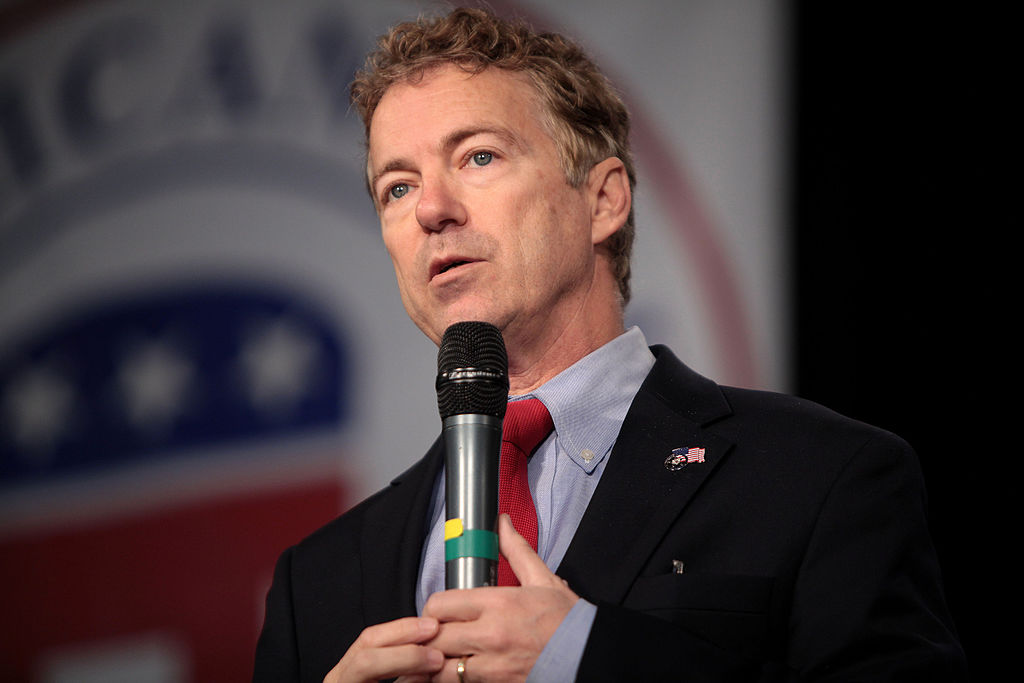
Sen. Rand Paul is raising concerns about President Donald Trump’s approach to Greenland, warning that the strategy may be undermining its own goals rather than advancing U.S. interests.
Appearing Sunday on ABC’s This Week, Paul argued that harsh rhetoric and public threats could alienate the very people whose cooperation would be necessary for any future agreement involving Greenland.
During an interview with host Martha Raddatz, Paul was asked about comments he made last week in which he said he would “do everything in [his] power” to prevent a military takeover of the island. Raddatz questioned whether such fears were an overreaction or whether the administration might actually consider force.
“I would hope not,” Paul responded.
The Kentucky senator explained that even if acquiring Greenland were strategically beneficial, the current messaging makes that outcome far less likely. According to Paul, publicly floating military pressure or hostile language only hardens opposition among Greenland’s population and damages America’s standing abroad.
Paul said that successful diplomacy requires persuasion, not intimidation. In his view, suggesting that the U.S. might use force if negotiations fail sends the wrong signal and discourages cooperation. Rather than opening doors, he argued, such talk risks slamming them shut.
He also noted that there is little support in Washington for military action over Greenland, regardless of party affiliation. Paul said it would be difficult to find lawmakers on either side of the aisle who would support sending U.S. troops into the situation.
His remarks come after the White House confirmed last week that it is keeping all options on the table regarding Greenland, including military involvement. Administration officials described the territory as a key national security interest, particularly as global competition in the Arctic intensifies.
Paul made clear that he strongly disagrees with that approach. He stressed that under the Constitution, decisions involving the use of military force are meant to be debated and authorized by Congress — not decided unilaterally by the executive branch.
Drawing comparisons to past foreign policy debates, Paul said the core issue is accountability and consent. “It’s about whether the people get a say in whether we go to war,” he said.
For many conservatives who value constitutional limits, fiscal restraint, and avoiding unnecessary foreign conflicts, Paul’s comments highlight a familiar concern: defending America’s interests abroad without repeating the mistakes of endless interventions or top-down decision-making.